Long Living Pets Nutrition
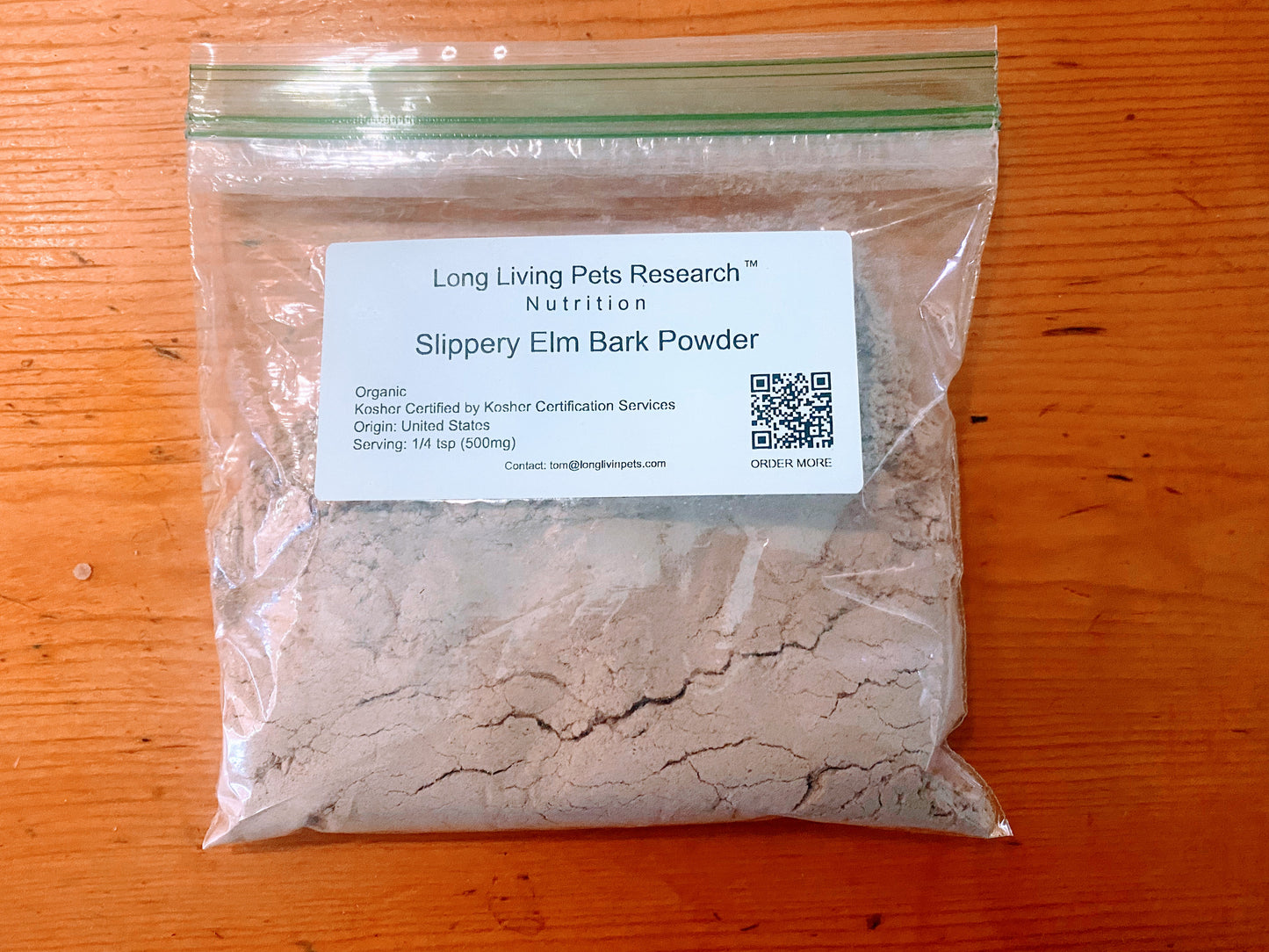
Slippery Elm Bark for Sensitive Digestive System
Slippery Elm Bark for Sensitive Digestive System
Couldn't load pickup availability
Slippery Elm for loose stools.
Slippery elm is my preferred product for managing loose stools.
When coming from kibble to raw, runny or soft stools can be an issue. Adding more bones and lowering the fat until this stabilizes is the first approach. If that does not work, use slippery elm.
A little goes a long way. Start with ¼ teaspoon. Add to the meal.
Contains 3oz of slippery elm.
The Core Benefit: Mucilage
The magic of slippery elm lies in its high mucilage content. When this powder mixes with moisture (like water or saliva), it transforms into a slick, viscous gel. This gel acts as a literal, physical bandage for the internal pathways of the body.
Here is a breakdown of how that mechanism benefits dogs:
1. Acute GI Distress (Diarrhea & Constipation)
Slippery elm is a famous "bipolar" herb because it addresses opposite digestive issues equally well:
- For Diarrhea: The gel coats and soothes an inflamed, irritated intestinal lining. It adds bulk to the stool and absorbs toxins, helping to firm up loose bowel movements quickly.
- For Constipation: The lubricating nature of the mucilage relaxes the bowel wall and provides a smooth passage for accumulated waste, easing elimination without forcing the body into an artificial laxative state.
2. Soothing Acid Reflux, Bilious Vomiting, & Megaesophagus
When a dog experiences acid reflux or frequent morning vomiting (bilious vomiting syndrome), the esophagus becomes raw and painful.
- Slippery elm coats the upper GI tract, protecting the esophageal tissue from burning stomach acid.
- For dogs with conditions like megaesophagus, it helps ease the discomfort of regurgitation by keeping the esophageal lining lubricated.
3. IBS, IBD, and Leaky Gut Support
For chronic inflammatory gut conditions, slippery elm offers dual action. Beyond the immediate physical protection of the mucosal lining, it acts as a prebiotic. It provides a nourishing food source for beneficial gut bacteria, helping to restore a balanced microbiome over time.
4. External Poultice for Wounds
While primarily used internally, the cooled gel can be applied topically to a dog's skin. It acts as a soothing, anti-inflammatory poultice for hot spots, minor insect stings, rashes, or shallow wounds, taking the sting out of the irritation.
Share